
Contents · 5
“Phone accessories” may mean a cable with no battery, a power bank, earphones with built-in batteries, a powered tracker or spare cells. Similar-looking products can have different transport classifications and packing requirements. An inquiry that says only “electronics” may produce a price and route that cannot be used.
The first step is not to choose sea or air, but to identify the battery: chemistry, model, quantity, rated voltage and capacity, watt-hours, whether it is shipped alone, packed with equipment or installed in equipment, and whether it is damaged, recalled, a sample or a prototype.
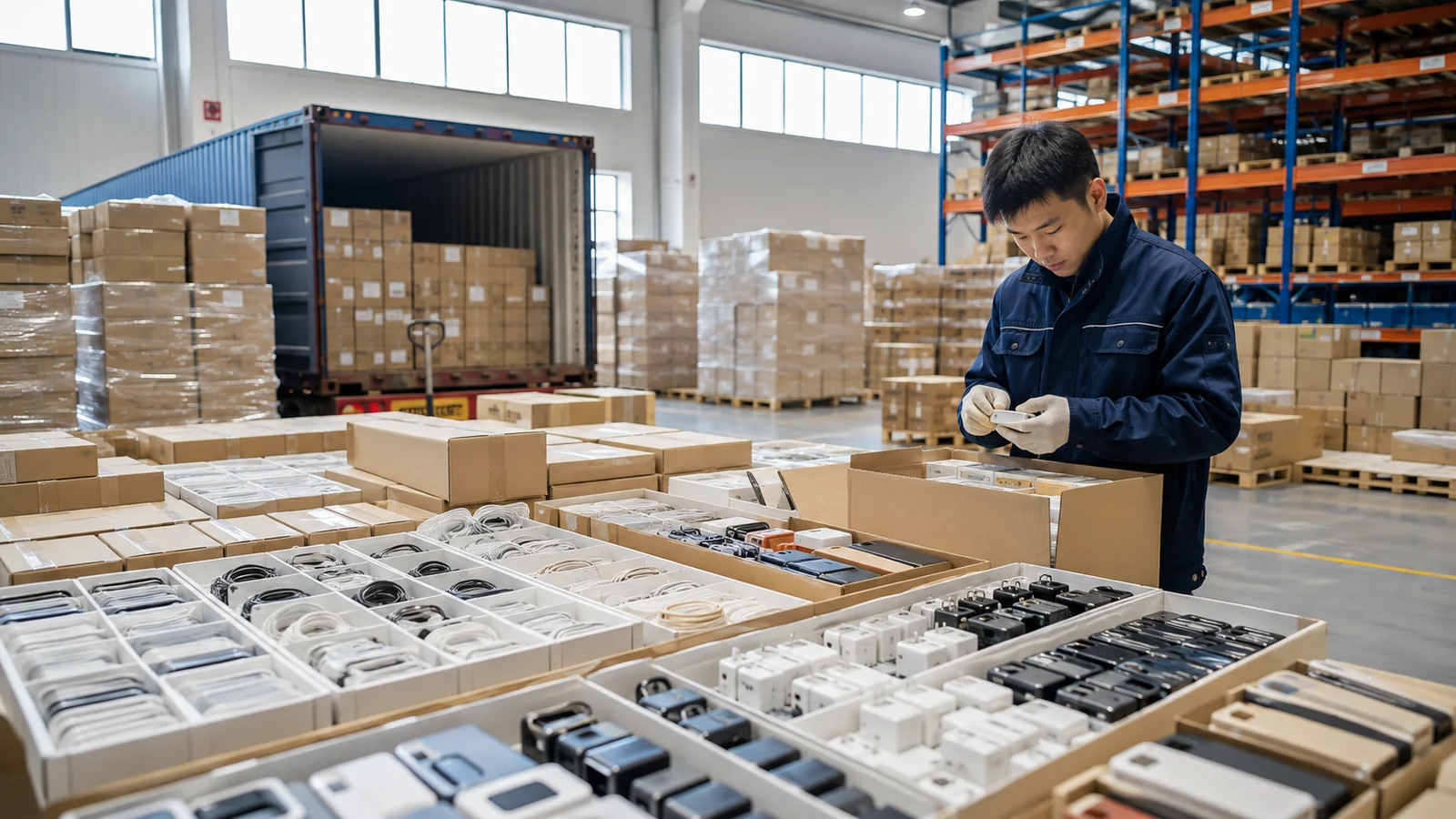
01 | Link the Product and Documents with a Battery Information Sheet
For each product model, identify the battery model and record its quantity, rated parameters, packing configuration, manufacturer, availability of the UN 38.3 test summary and safety data. Do not use one vague “battery report” to cover different models; the records should show that the battery in the report matches the actual goods.
IATA’s battery-shipping guidance issued for its 2026 rules continues to emphasize that requirements depend on the current dangerous-goods rules and differences among countries and carriers. The test summary should be available, but whether it must accompany each shipment and in what form must be confirmed under the relevant country or carrier requirements.
02 | Packaging Must Prevent Damage, Short Circuits and Accidental Activation
Battery terminals or connectors should be protected from contact with conductive materials. Products should not move freely inside the package, and equipment should be protected against accidental activation in transit. Batteries installed in equipment, packed with equipment or packed alone may be subject to different packaging, marking and quantity assessments.
Outer-package marks and documents must match the actual packing configuration. If a warehouse puts spare batteries into an equipment carton or combines several small packages into an outer package, the marks, visibility and document requirements may change. Review the shipment again before handover.
03 | Check Current Rules Separately for Air and Sea
For air transport, check classification, packing, state of charge, quantity, marks and documents under the current IATA Dangerous Goods Regulations, including applicable country and airline variations. For sea transport, assess packaged dangerous goods under the applicable IMDG Code and other requirements. The IMO explains that the IMDG Code covers classification, packing, marking, labelling, documentation, stowage and segregation.
The specific edition and carrier requirements applied in 2026 may continue to change, so this article does not provide a packing instruction that can be used indefinitely. Before shipment, the product information must be reviewed by the appropriately qualified responsible party and carrier.
04 | How Jingyuan Handles Inquiries for Battery-Powered Goods
Jingyuan first distinguishes standalone batteries, batteries packed with equipment and batteries installed in equipment; collects model parameters, test summaries, safety documents, packing photos and quantities; and then checks currently available transport resources. If information is incomplete or the physical goods cannot be matched to the report, Jingyuan will not promise to move them through an ordinary-cargo channel.
For cables, housings or brackets without batteries, confirm whether they have magnetic properties, liquids, branded goods or other special characteristics. The customer and manufacturer are responsible for accurate, complete product information. Jingyuan coordinates transport review and route inquiries; final carriage conditions are subject to confirmation by the responsible parties and carrier.
Frequently asked questions
Is it enough to write “battery built in”?
No. Provide the battery chemistry, model, quantity, rated parameters, packing configuration, test summary and safety information.
Must the UN 38.3 test summary accompany every shipment?
The test summary should be available, but whether it must be submitted with each shipment and in what form depends on the applicable rules, country and carrier. Confirm before shipment.
Are battery-powered goods automatically ordinary cargo by sea?
No. Sea shipments also need assessment under the applicable IMDG Code, cargo classification and carrier conditions.
Can a warehouse put spare batteries into an equipment carton at the last minute?
Do not do so without review. A change in packing configuration may affect classification, marks, quantity limits and documents.