
Contents · 7
Author: Ethan | Review date: October 20, 2026.
A machinery enquiry should describe its actual transport condition: complete equipment, disassembled components, or equipment in a base-mounted crate. Dimensions and weight after installation do not replace data after packing, securing and dismantling. This article helps prepare information and define responsibilities; it does not calculate lifting plans or promise that a particular machine can be carried.
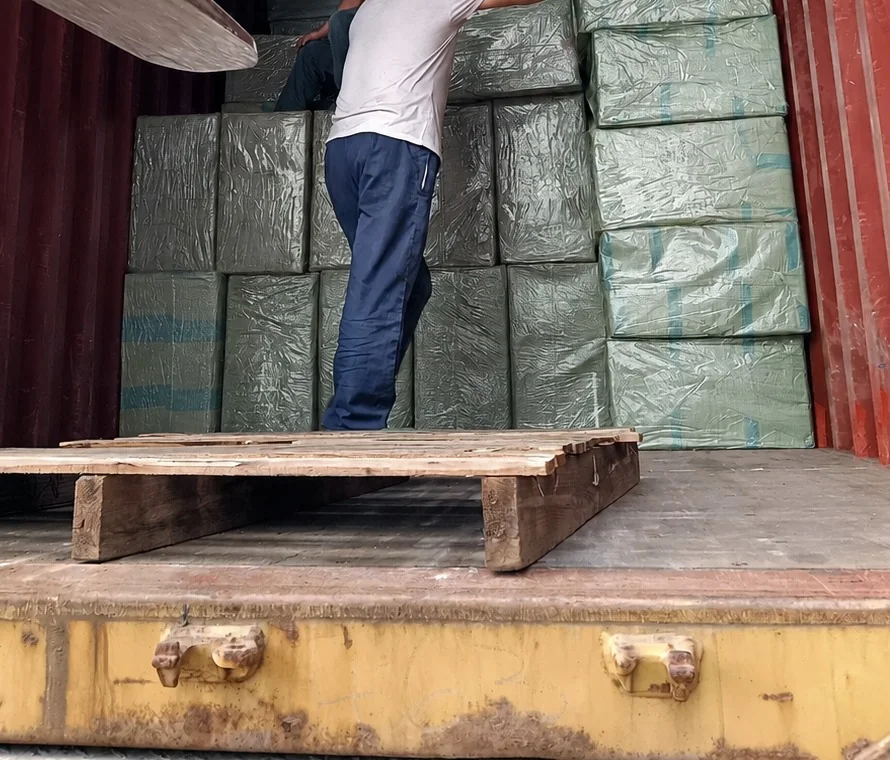
01 | Choose a plan using transport data, not the equipment name
Ask the manufacturer or authorized technical party for packed length, width, height and weight with their basis; protrusions; detachable parts; centre-of-gravity location; lifting points or fork pockets; surfaces that must not bear load; and whether tilting is permitted. List the complete machine and each component separately; do not divide one total weight evenly among crates.
Data should match the specific model and transport configuration. If packaging changes, parts are removed or a base is added, reconfirm the data and centre-of-gravity changes. The relevant specialists should assess container type, road transport, handling and site-equipment capacity. Fitting inside does not prove that rated payload, point loads and operating conditions are acceptable.
02 | “Drained” does not replace a description of contents and condition
Ask the supplier whether fuel, lubricating oil, hydraulic oil, refrigerant, pressurized components, batteries or other special materials are present, and state whether they will remain, be removed or be treated for transport. Safety data, technical information and treatment records should match the actual equipment.
Residual material does not automatically make cargo dangerous goods; a statement that it is drained or disconnected does not justify promising ordinary-cargo acceptance either. Provide actual information to the personnel and carrier responsible, who can assess transport classification, packaging and acceptance under current rules.
03 | Lifting and securing need separate plans
The manufacturer should specify the lifting-point use case and whether the equipment can be forked; the qualified handling team should verify lifting gear. Do not assume a hole in a photo is a lifting point, or invent sling angles, loads or equipment capacity during quotation.
Securing cargo against movement during transport is different from lifting it during handling. Cargo support, dunnage, securing and safe-unloading needs inside a container require professional assessment against the actual container and equipment. A general loading checklist can identify missing information but cannot replace a special plan for heavy or out-of-gauge equipment.
04 | Dismantling may reduce dimensions but can complicate complete delivery
Dismantling may change dimensions but adds packing, handling and destination assembly work. Confirm who dismantles and reassembles, whether testing or warranty arrangements are affected, whether tools and key accessories travel together, and whether the technical party approves the transport configuration.
Assign each component a package number linked to the parent machine, model and accessories list; mark no-stacking or orientation requirements. Do not remove a key support temporarily to reduce chargeable dimensions without confirming transport and site reassembly conditions.
05 | Confirm that Iraq can unload it, not only that China can load it
Include the destination city and exact address, site access, ground and handling-area conditions, available equipment and receiving window in the enquiry. Heavy-equipment capability at origin does not prove equal capability at destination; verify equipment and operating prerequisites separately.
Suggested fields: model/transport configuration | packed dimensions and weight with basis | component numbers | centre-of-gravity/lifting-point/fork-pocket data | media and battery condition | packing and securing requirements | origin loading conditions | Iraq site conditions | responsible specialist | information gaps and confirmation deadline.
With complete information, Jingyuan can organize China-side export pickup/consolidation, booking and transport enquiries. Container type, carrier, handling or destination coordination must be confirmed after specialist assessment and current resource checks, then specified in the instruction. Customs clearance and local delivery are confirmed per shipment if required; no unverified lifting or delivery capability is promised.
Sources and scope
IMO official introduction to the CTU Code, opened on October 20, 2026: imo.org, “IMO/ILO/UNECE Code of Practice for Packing of Cargo Transport Units.” The CTU Code is a non-mandatory global code of practice covering loading, securing and receipt/unpacking; it does not replace engineering assessment or applicable local requirements.
IMO official introduction to the IMDG Code: imo.org, “The International Maritime Dangerous Goods Code.” It explains rules including classification, packaging and stowage for packaged dangerous goods. This article gives no classification or packaging instruction for a specific substance; review the actual media, condition and applicable current edition. Both pages were checked on October 20, 2026.
Frequently asked questions
If the machine fits in a standard container, can it be booked as standard cargo?
Not on that basis alone. Verify transport-condition dimensions and weight, load support, protrusions, handling and securing conditions, and obtain assessment from the relevant specialists and carrier.
If the machine has been drained of oil, is it definitely ordinary cargo?
That cannot be decided from draining alone. Disclose residual media, pressure, batteries and the actual transport condition for review by the responsible parties under current rules.
Can I identify lifting points from a photograph?
No. The manufacturer or authorized technical party should provide lifting-point and load information, which qualified handling personnel then verify. Do not guess from a photo.
Will splitting the equipment into several crates definitely cost less?
Not necessarily. Compare added packing and handling, complete-set delivery, site reassembly and technical approval; do not compare volume alone.